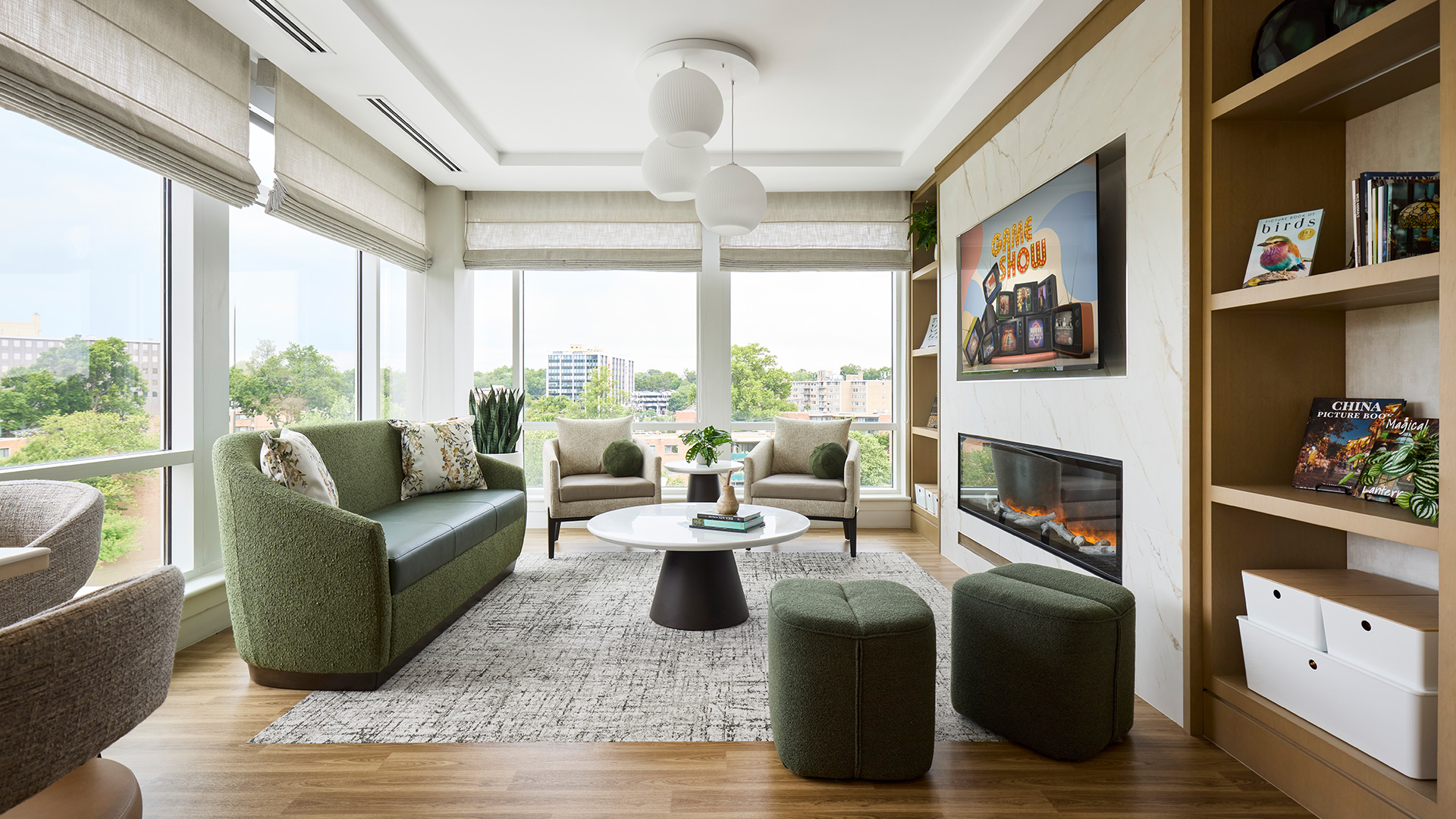
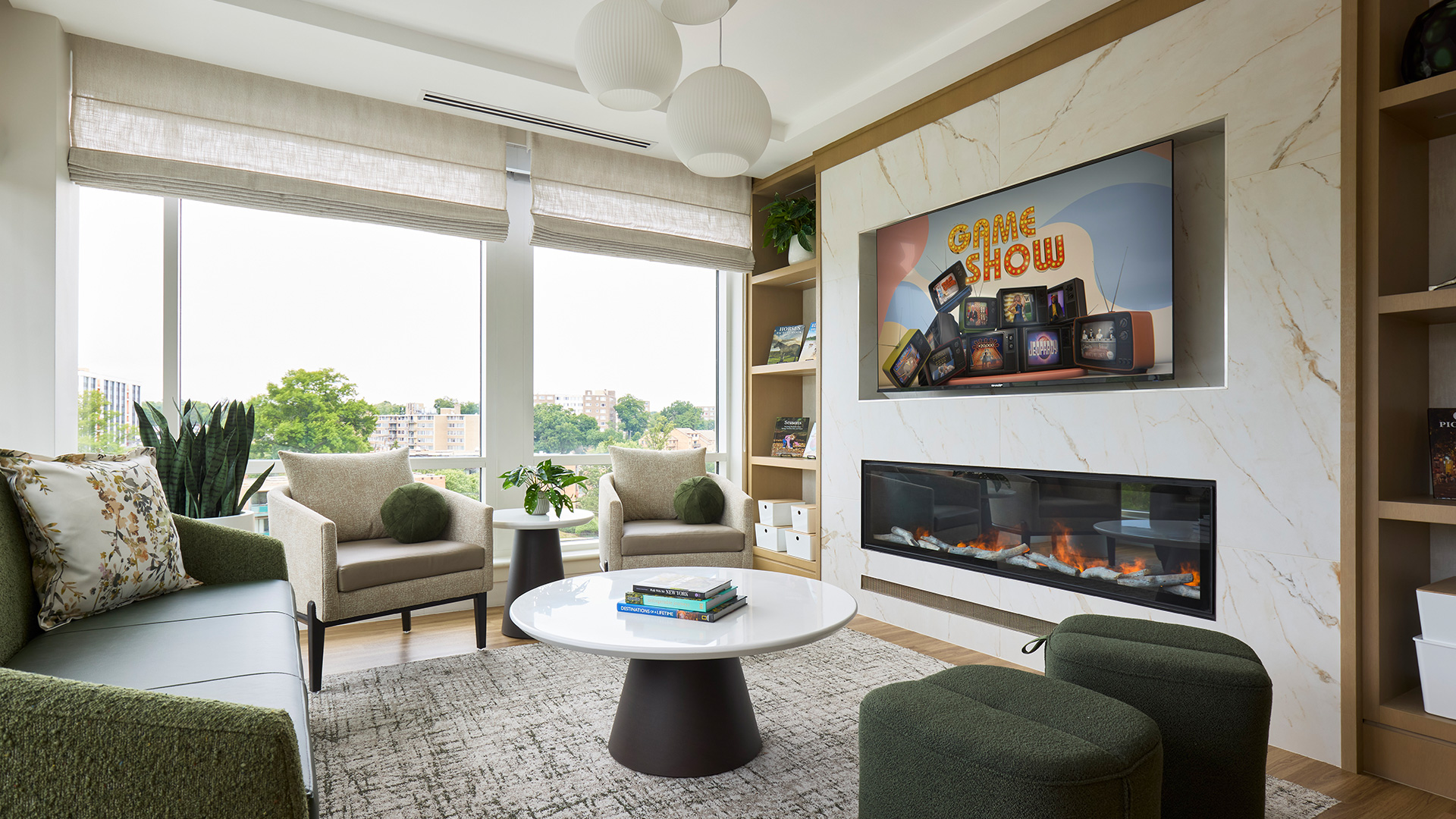
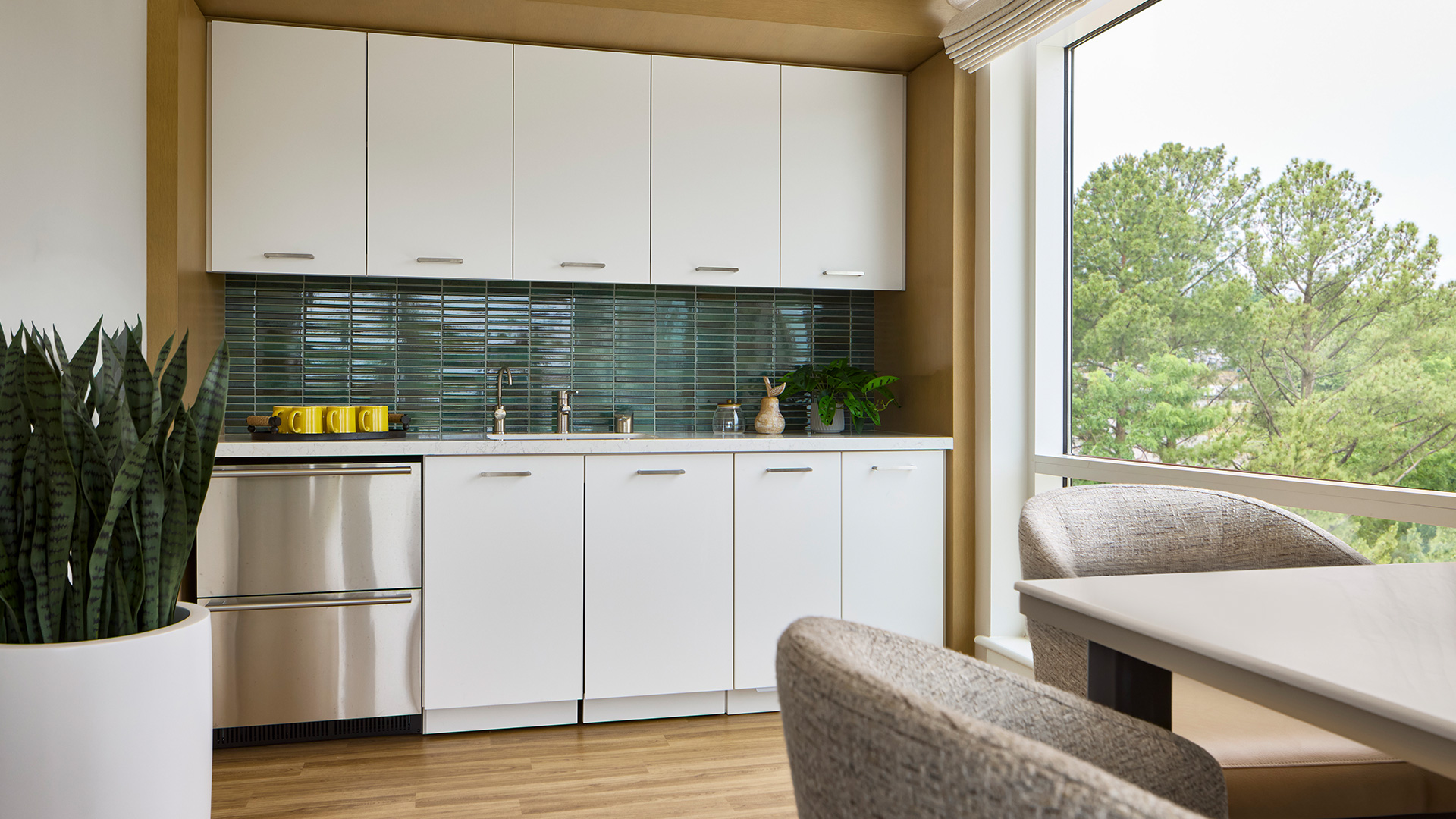
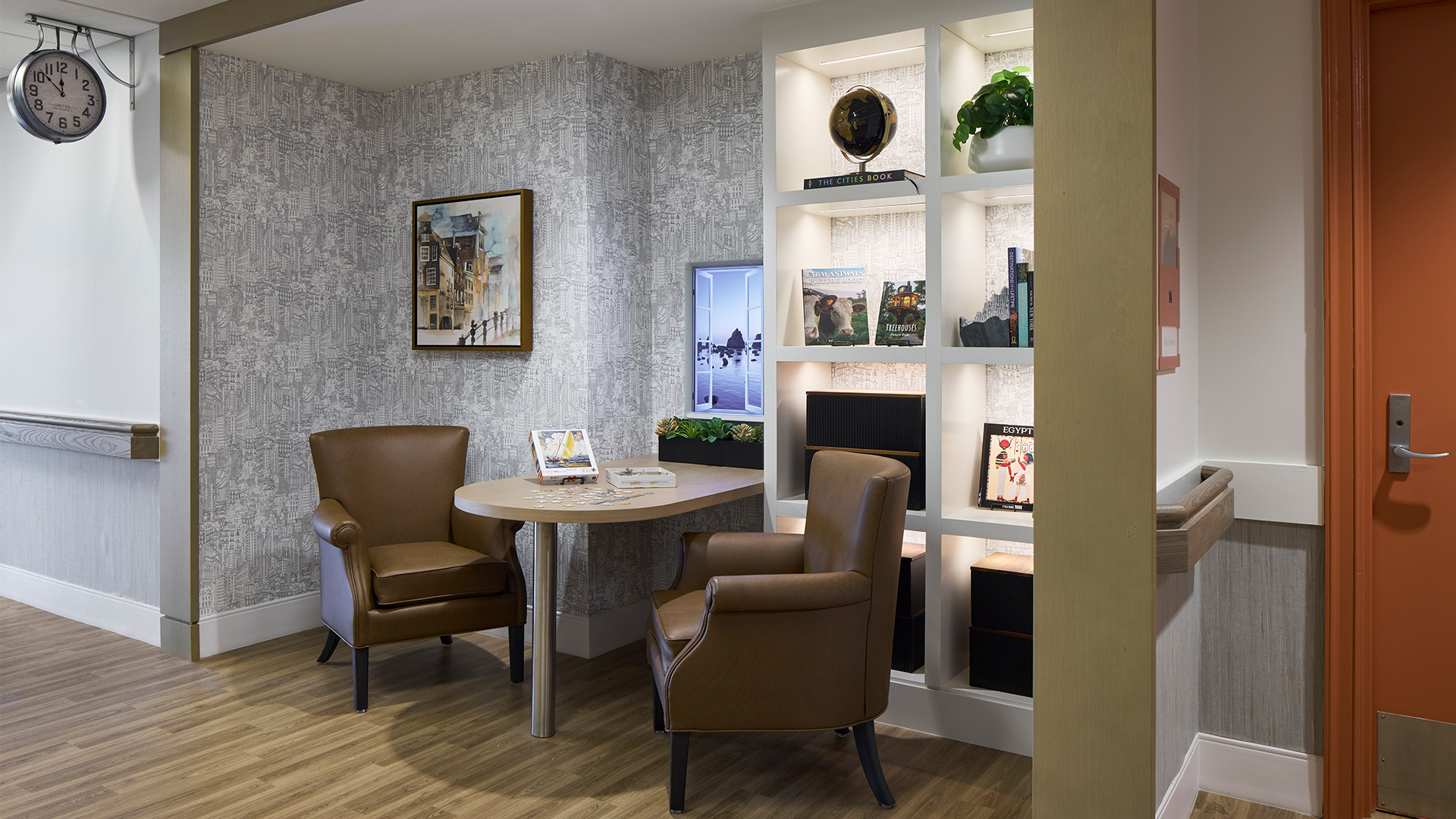
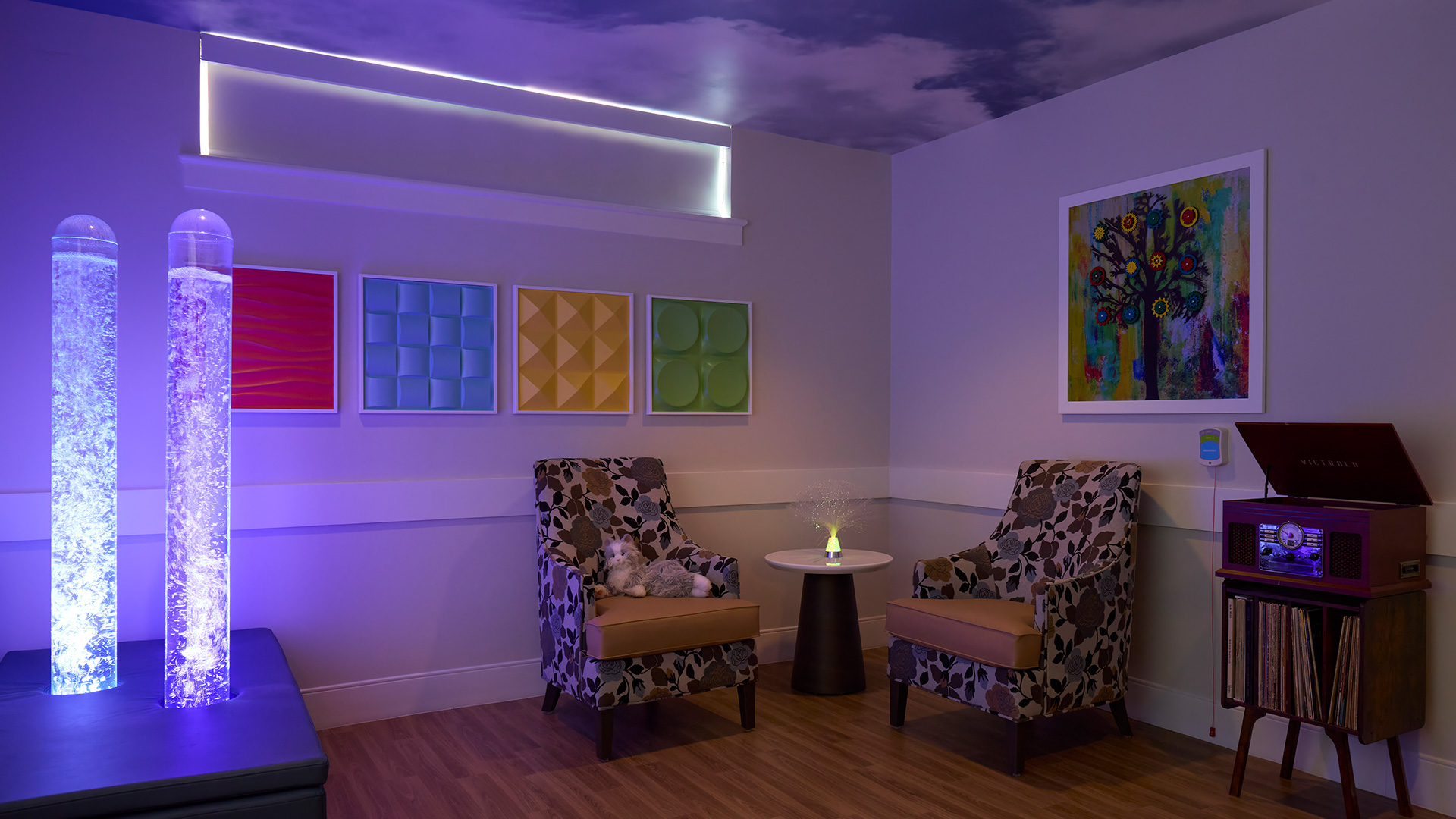
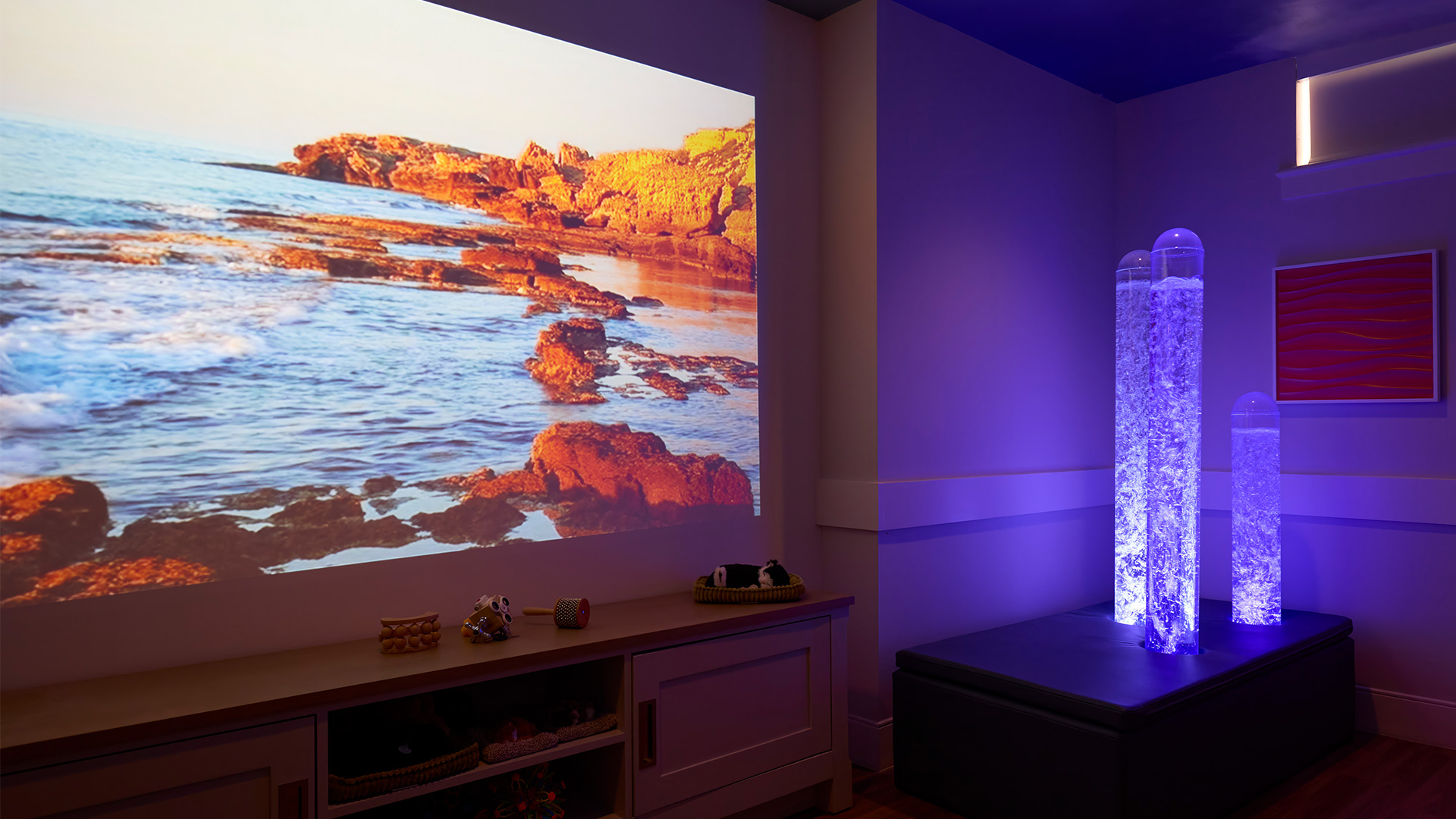
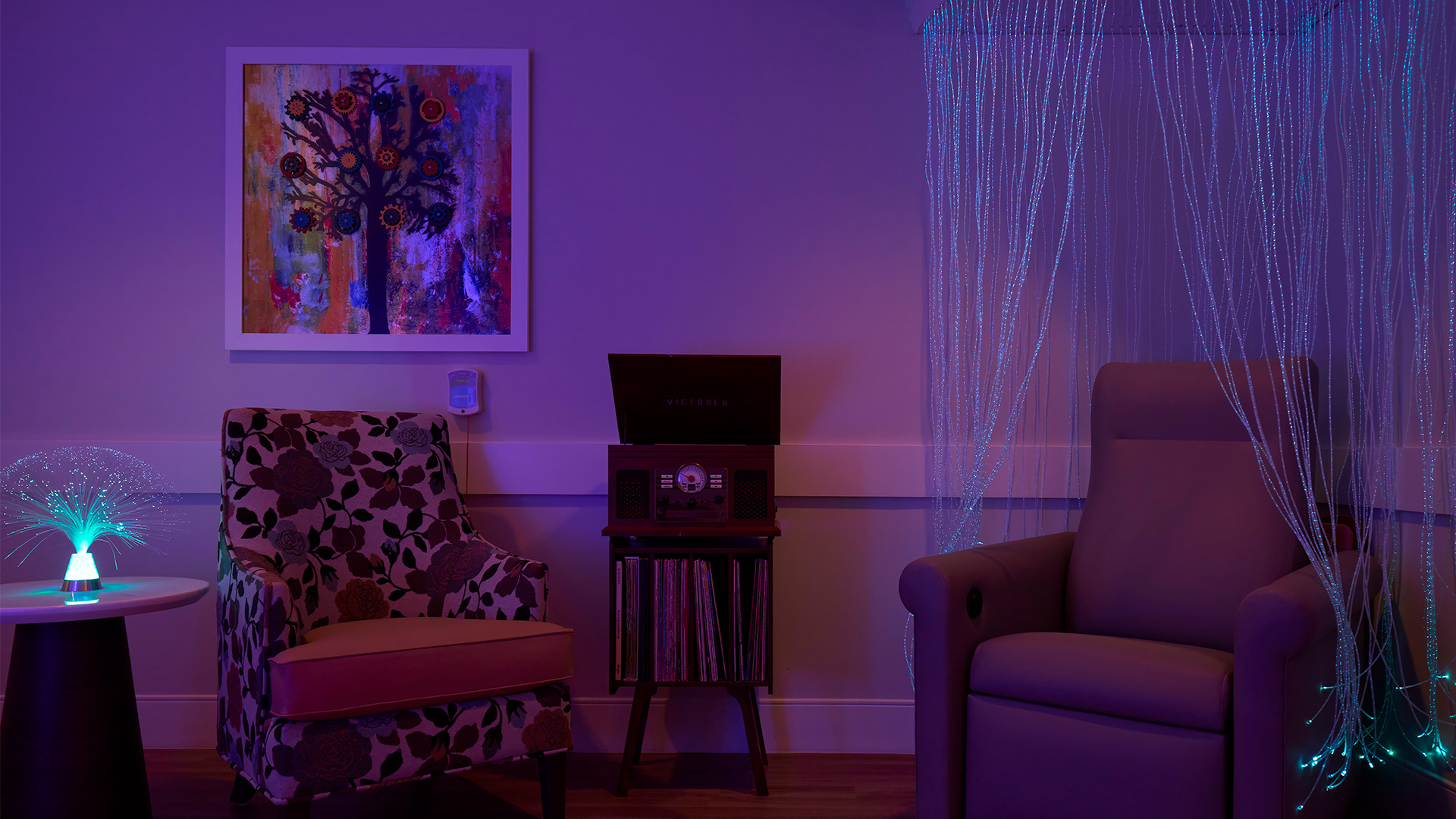
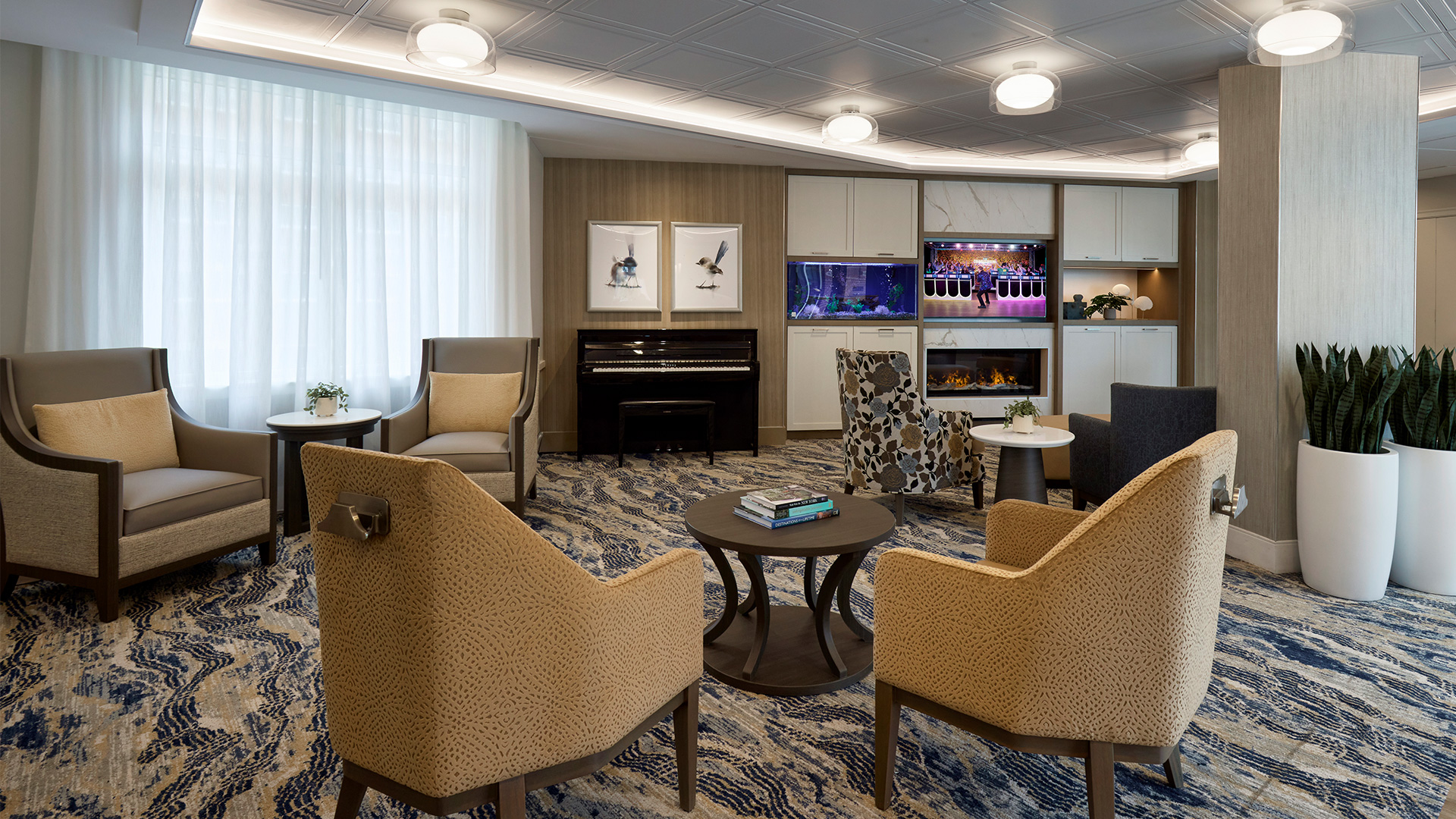
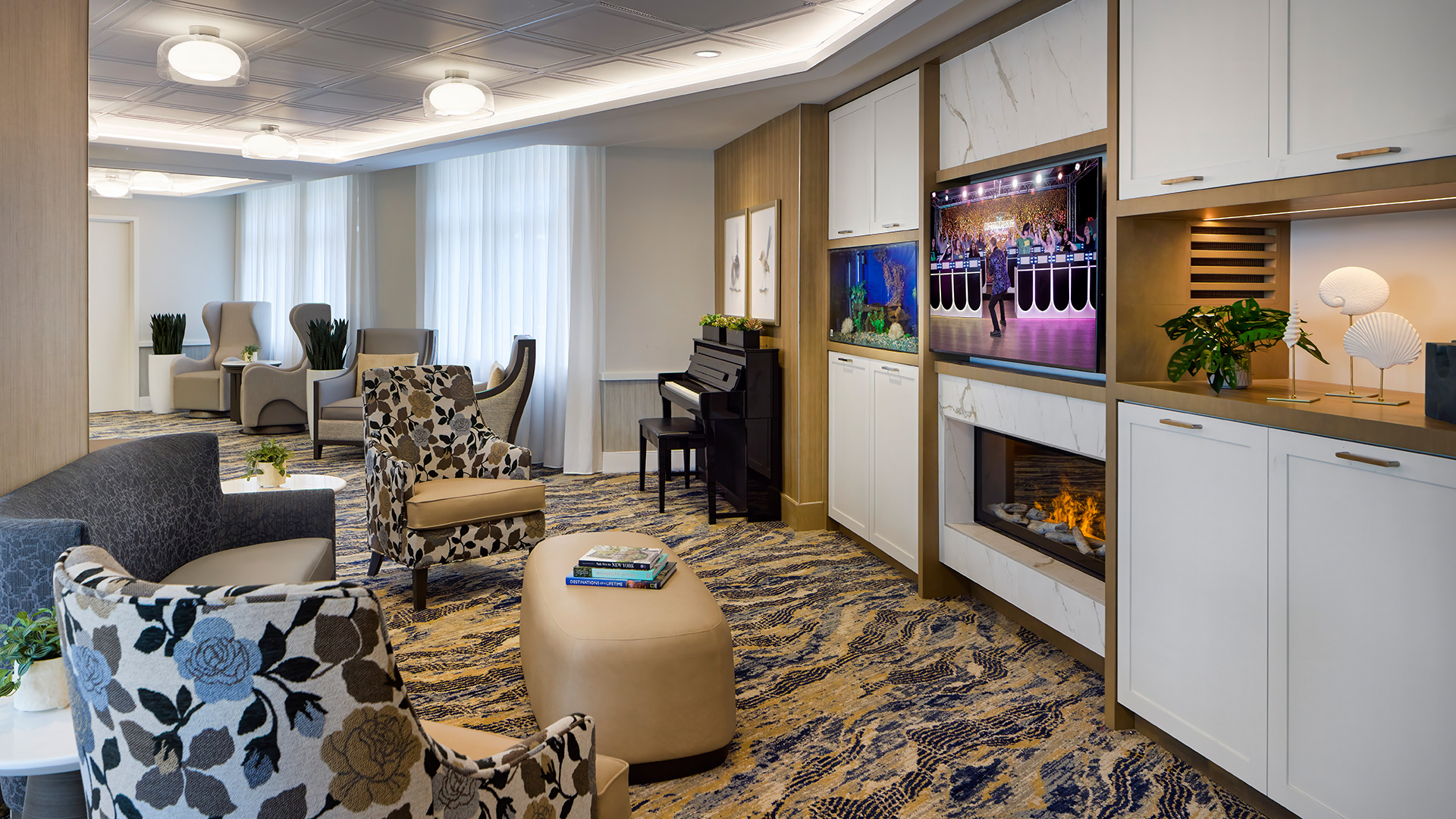
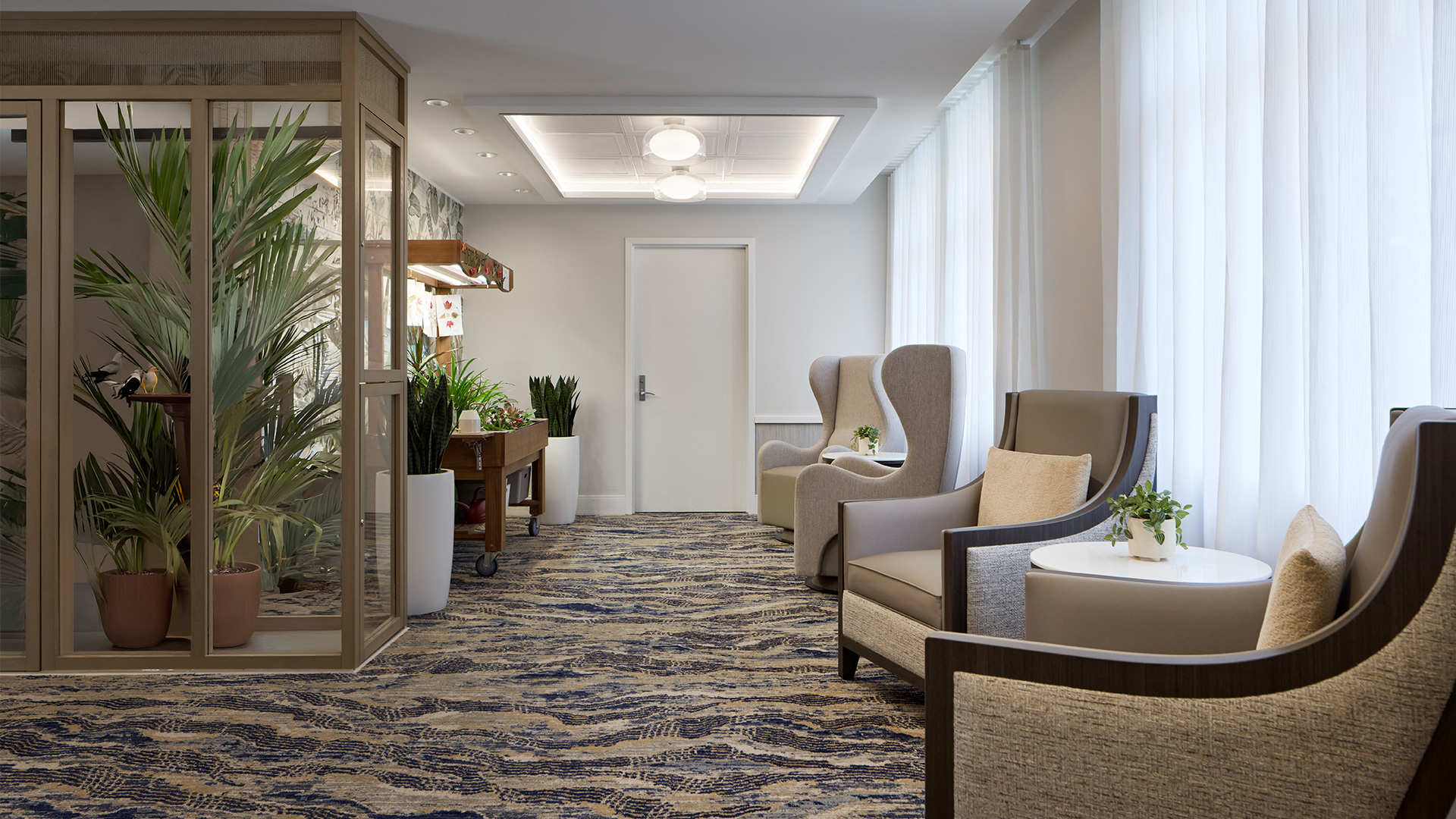
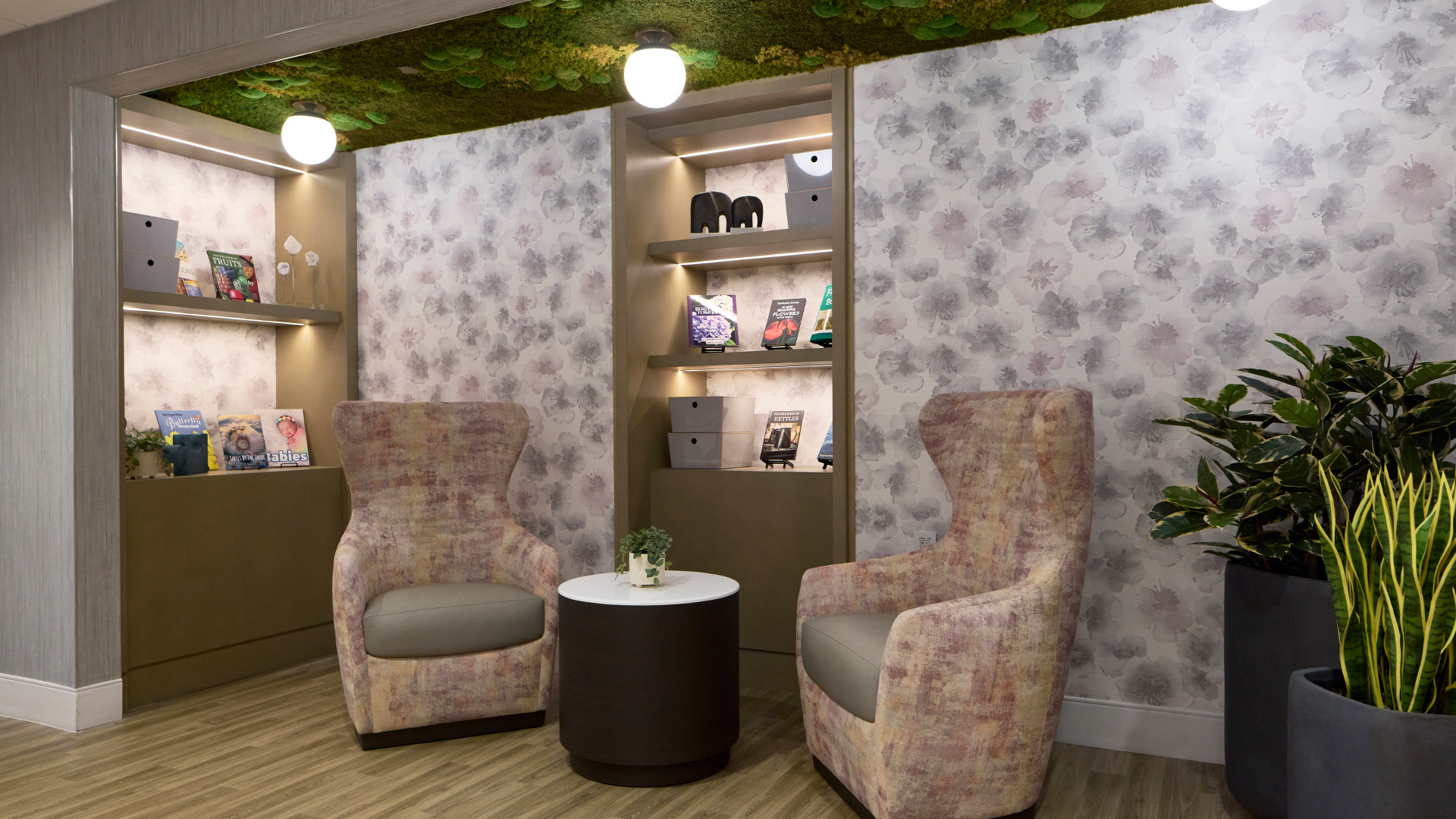
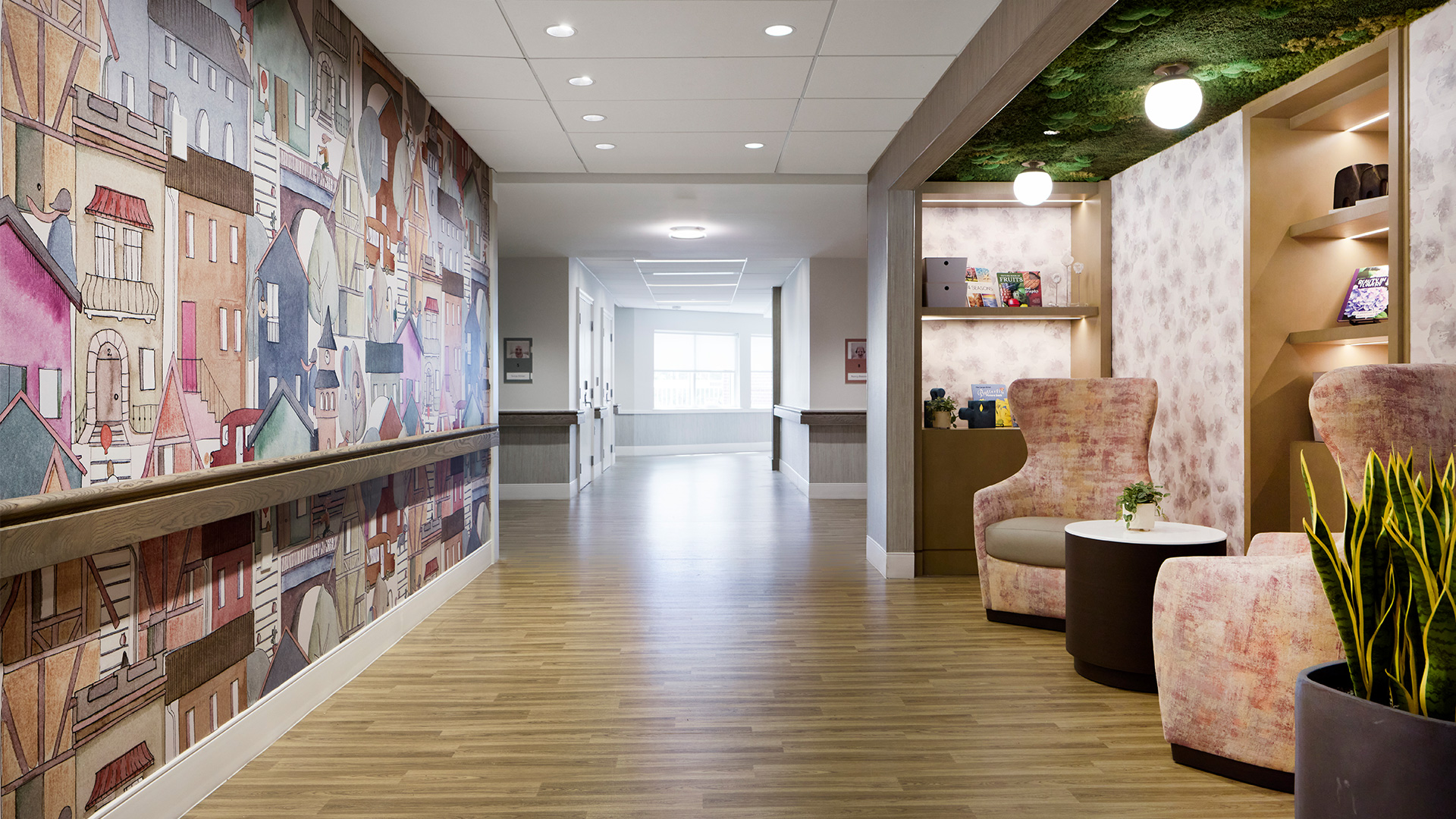
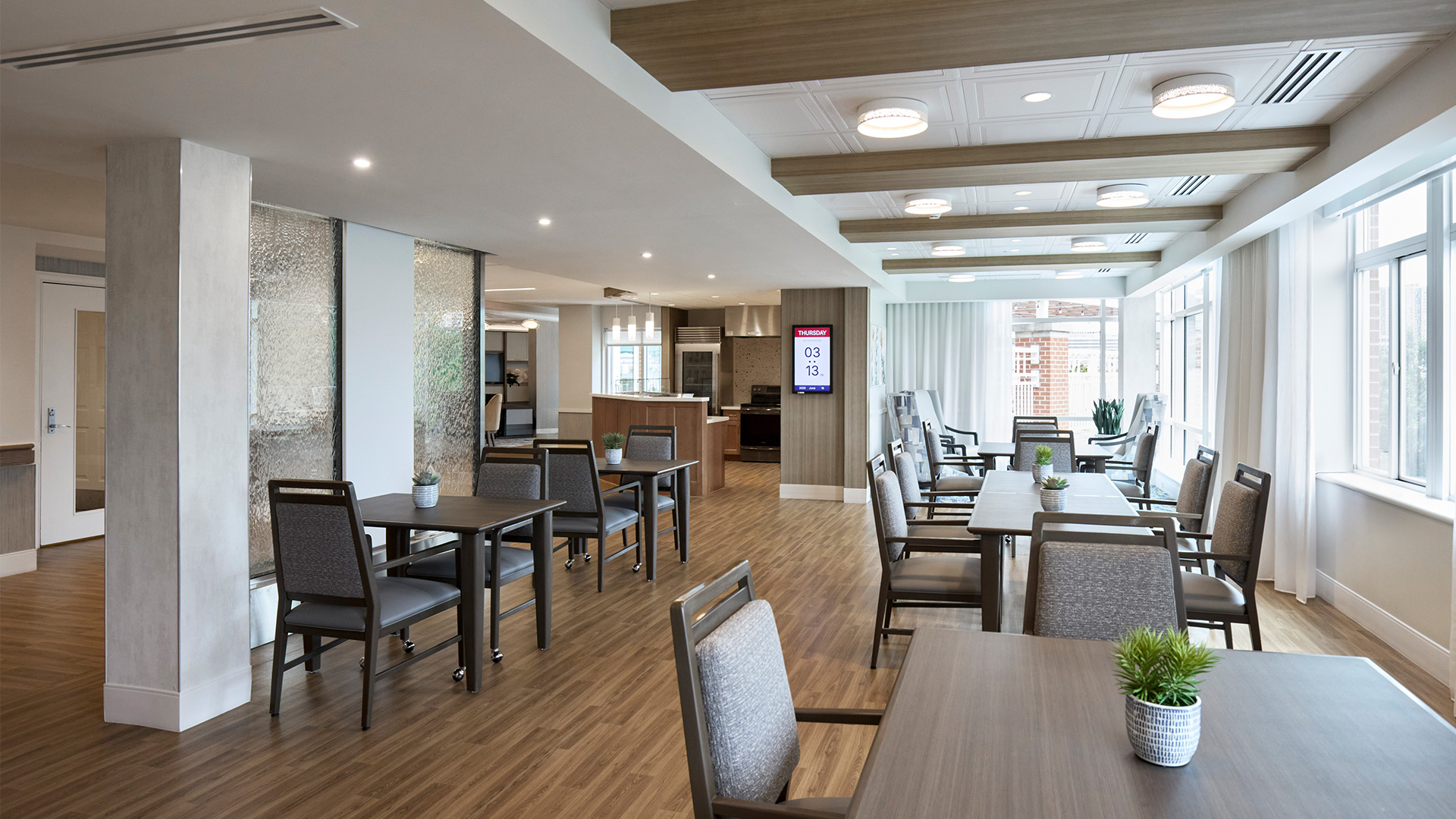
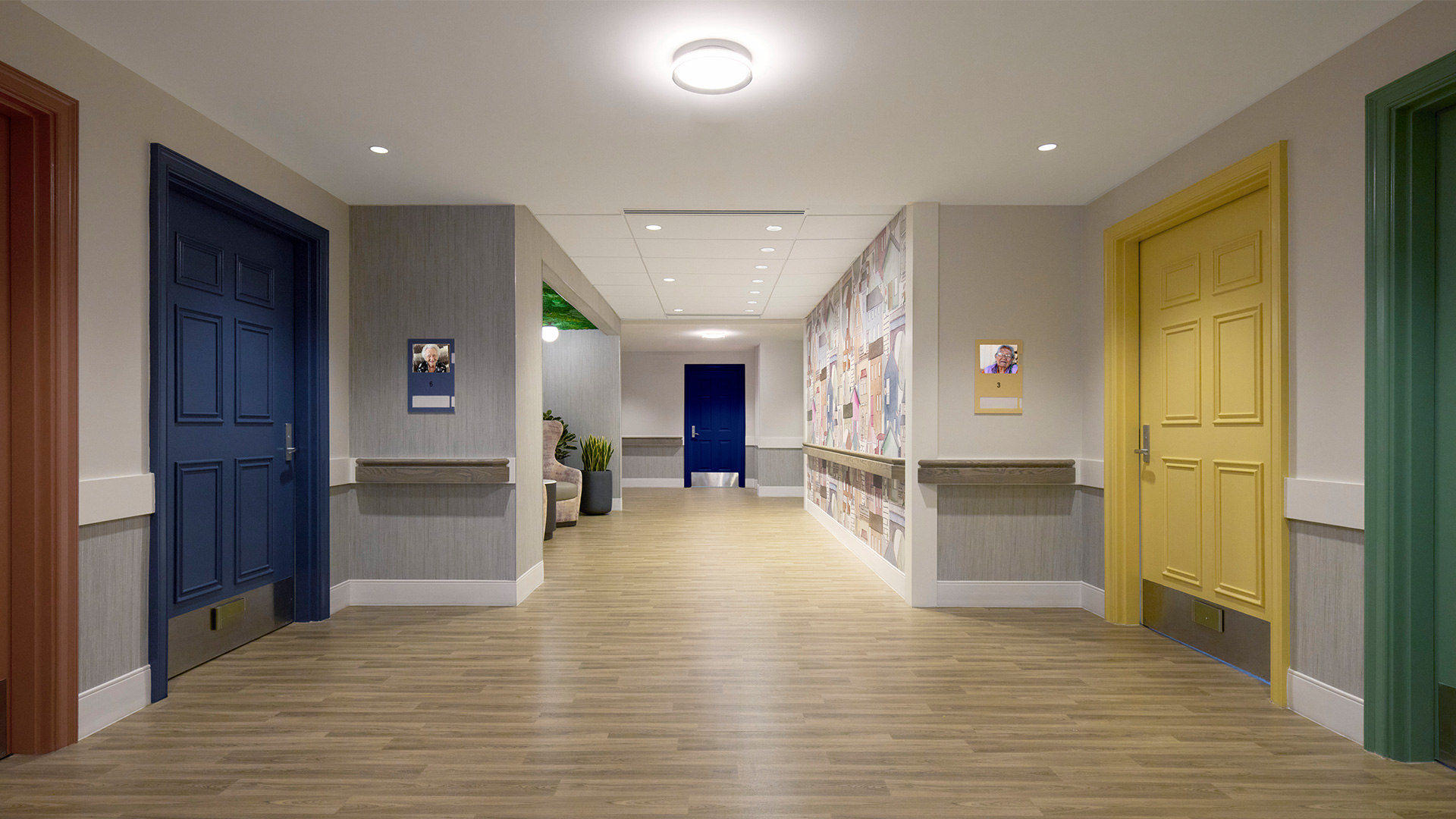
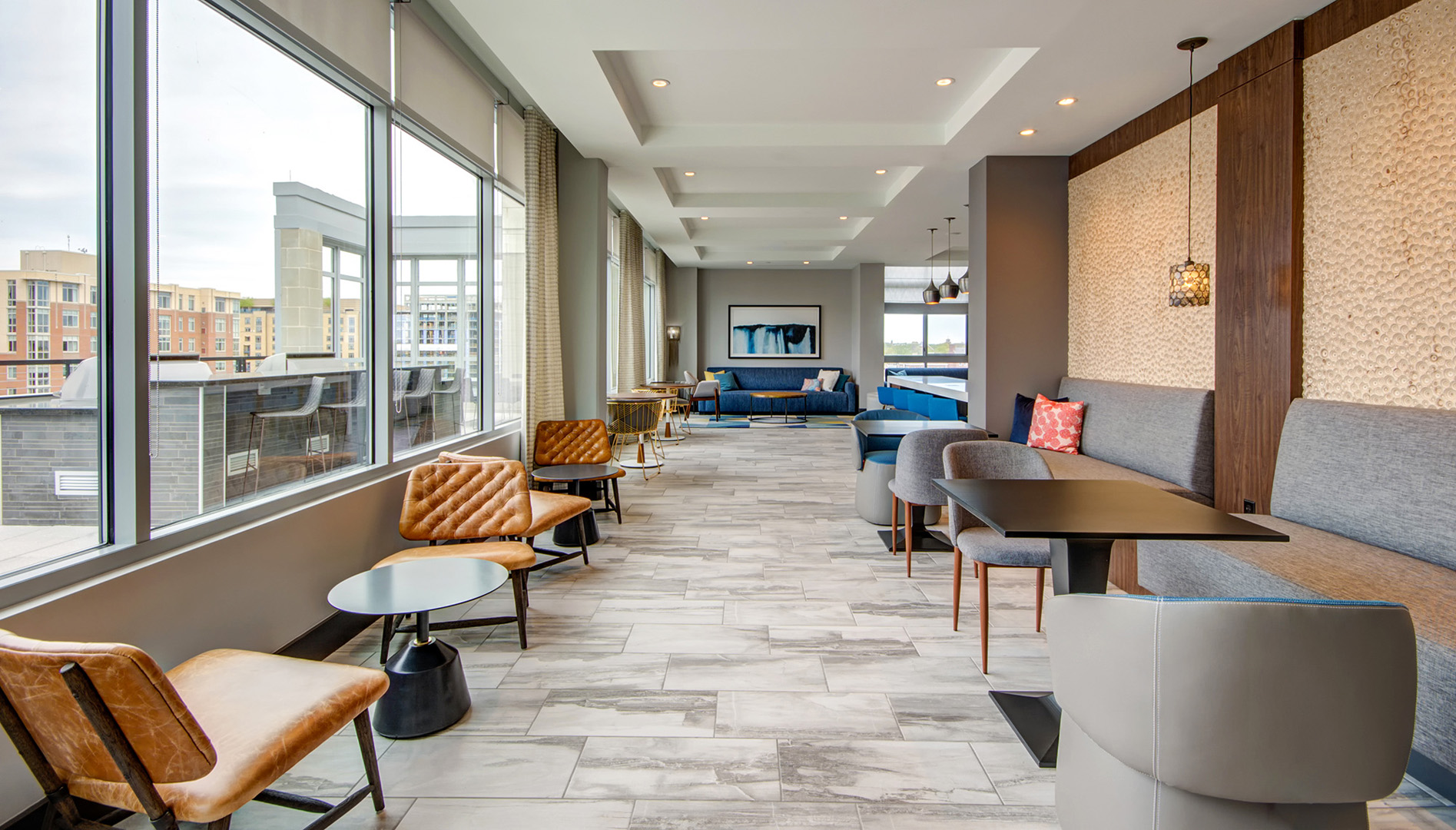
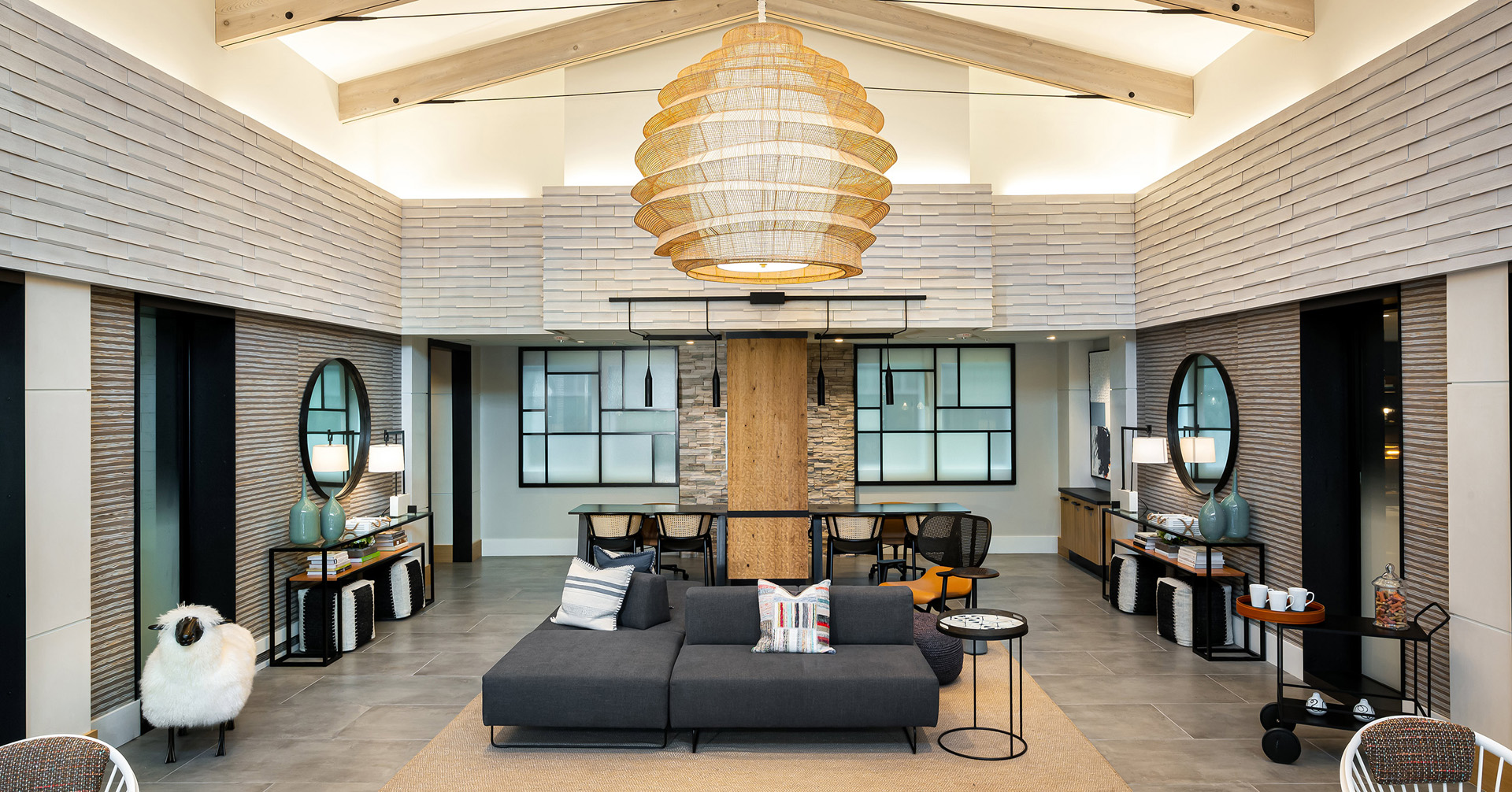
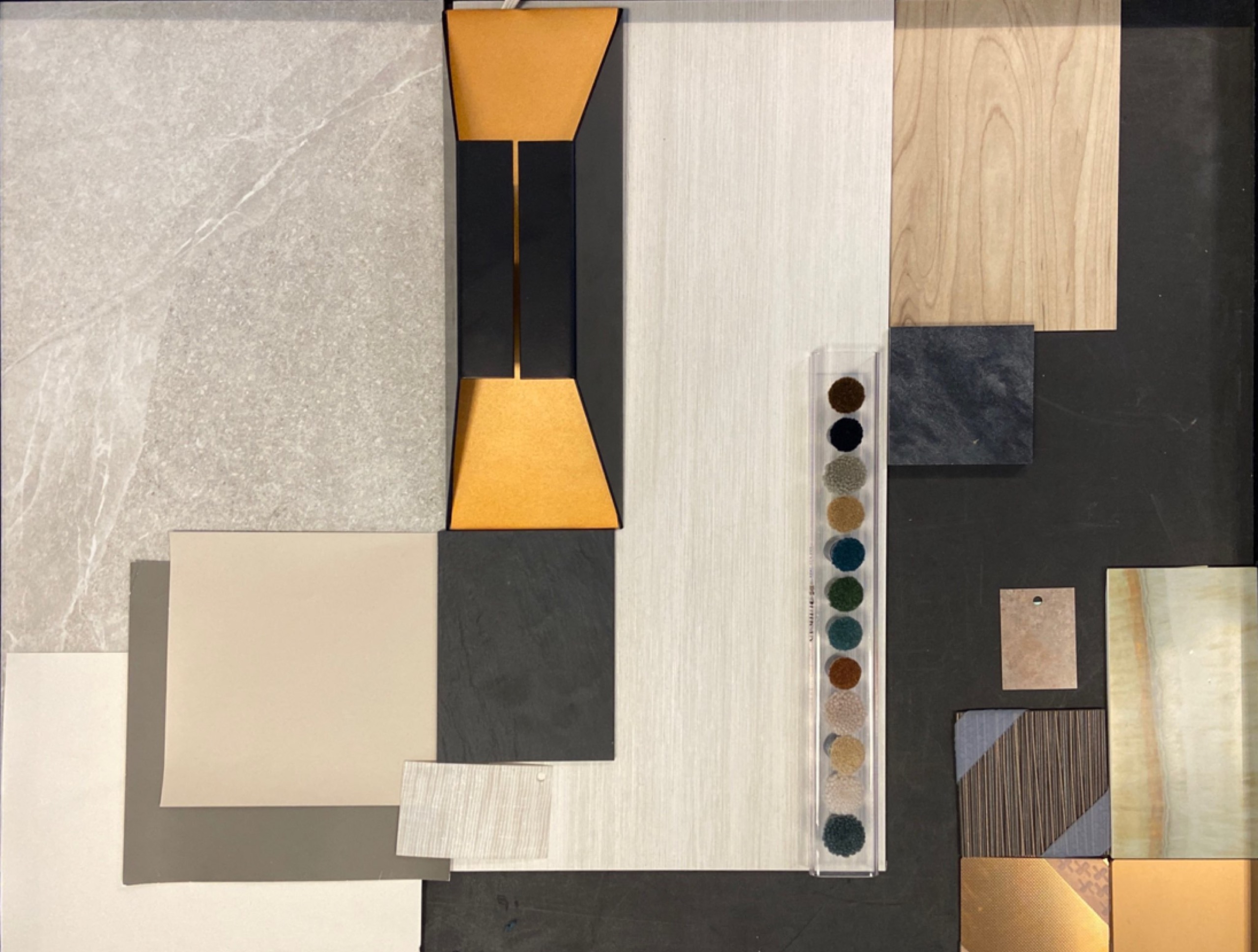
Rather than concentrating activities within a single living room, the renovated neighborhood now offers a variety of experiences throughout the resident journey. Existing closets became themed engagement niches, an underutilized bathing room was transformed into a dedicated sensory room, and corridors evolved into welcoming destinations featuring a resident library and comfortable seating that encourage exploration and conversation. The dining room was reimagined as a multifunctional gathering space supporting meals, art activities, and gardening. A custom water feature creates a calming focal point upon arrival while discreetly screening direct views to the main entrance, reducing visual exit cues for residents. Integrated gardening areas and a mobile planting cart provide familiar, hands-on activities that encourage purpose, familiar daily routines, and connection with nature.
Every design decision was carefully considered to create an environment that feels familiar, calming, and residential rather than clinical. Warm natural materials, layered lighting, comfortable furnishings, nature-inspired finishes, carefully selected color palettes, and engaging features such as the aquarium, aviary, library, sensory room, and themed displays provide opportunities for discovery while supporting orientation, reducing anxiety, and encouraging conversation.
Collaboration was fundamental to the project's success. The design team worked closely with community leadership, caregivers, and the Brain Health team to ensure every intervention supported both operational efficiency and resident well-being. By maximizing the existing footprint rather than expanding it, the renovation demonstrates how thoughtful design can dramatically improve quality of life within an existing community.
The completed renovation has transformed daily life for residents, staff, and families. Residents now enjoy multiple destinations for gathering, quiet reflection, creative expression, and meaningful engagement throughout the day. One resident shared that they had always been intimidated by the Memory Care neighborhood. After represents the project's greatest success: not simply transforming a physical environment, but changing percept touring the renovated space, they said they were genuinely happy for the residents who lived there and no longer viewed Memory Care with fear. That response captures the project's greatest success: not simply transforming a physical environment, but changing perceptions of what Memory Care can and should be.